Friday, 3 July 2020

Bhakra dam’s water levels brought down by 41 ft to prevent floods this year

Sources in the BBMB said water was released continuously downstream in summer months, irrespective of whether there was a demand for irrigation on several days, to create the space so as to prevent flooding during monsoons in Punjab.
imd monsoons, monsoons this year, Bhakra dam, Bhakra dam water level, Bhakra dam flooding, punjab monsoons
O PREVENT a repeat of last year’s floods, the Bhakra Beas Management Board (BBMB) has created sufficient cushioning in the Bhakra dam by bringing its level down by 41 ft, ahead of monsoon season. However, the Punjab government’s much-needed project to canalise its rivers, which is aimed at preventing floods, is yet to see light of day.[Readmore]

Almatti dam: Devendra Fadnavis demands agreement with Karnataka


KOLHAPUR: The onset of monsoon has once again brought the issue of Karnataka-based Almatti damto the fore with former chief minister Devendra Fadnavisdemanding to have a permanent arrangement on the release of water.
In a letter to chief minister Uddhav Thackeray, Fadnavis has underlined the need for having some agreement with Karnataka on the release of water from Almatti dam. 
Fadnavis, in the letter, has said that water from several rivers and dams in western Maharashtra goes into Almatti dam. “Backwater of Almatti dam cause flood in Satara, Sangli and Kolhapur districts,” Fadnavis said, adding that increase in the discharge from Almatti dam was the only solution to the problem[Readmore]

Indian reservoirs brimming as monsoon advances

Storage levels in 123 reservoirs monitored by Central Water Commission was 194 % of the levels of corresponding period in 2019

Reservoirs across India are already full even as the monsoon is advancing over the country. Photo: pexels.com

Major reservoirs in India are already brimming and their storage level is much more than what it was this time in 2019, even as the southwest monsoon advances over India. 

The live storage available in 123 reservoirs monitored by Central Water Commission (CWC) was 194 per cent of the live storage of corresponding period of last year and 171 per cent of storage of average of the last 10 years.

Live storage available in these reservoirs now is 56.725 billion cubic metres (BCM), which is 33 per cent of total live storage capacity of these reservoirs, according to a weekly bulletin issued by CWC on June 25, 2020.

The live storage available in these reservoirs for the corresponding period in 2019 was 29.166 BCM and the average of last 10 years live storage was 33.207 BCM. [Readmore]

Himalayan Quake and a High-Risk Project


While many projects with huge environmental and social costs have been opposed, the TDP is different, for even government-nominated experts had wanted it scrapped

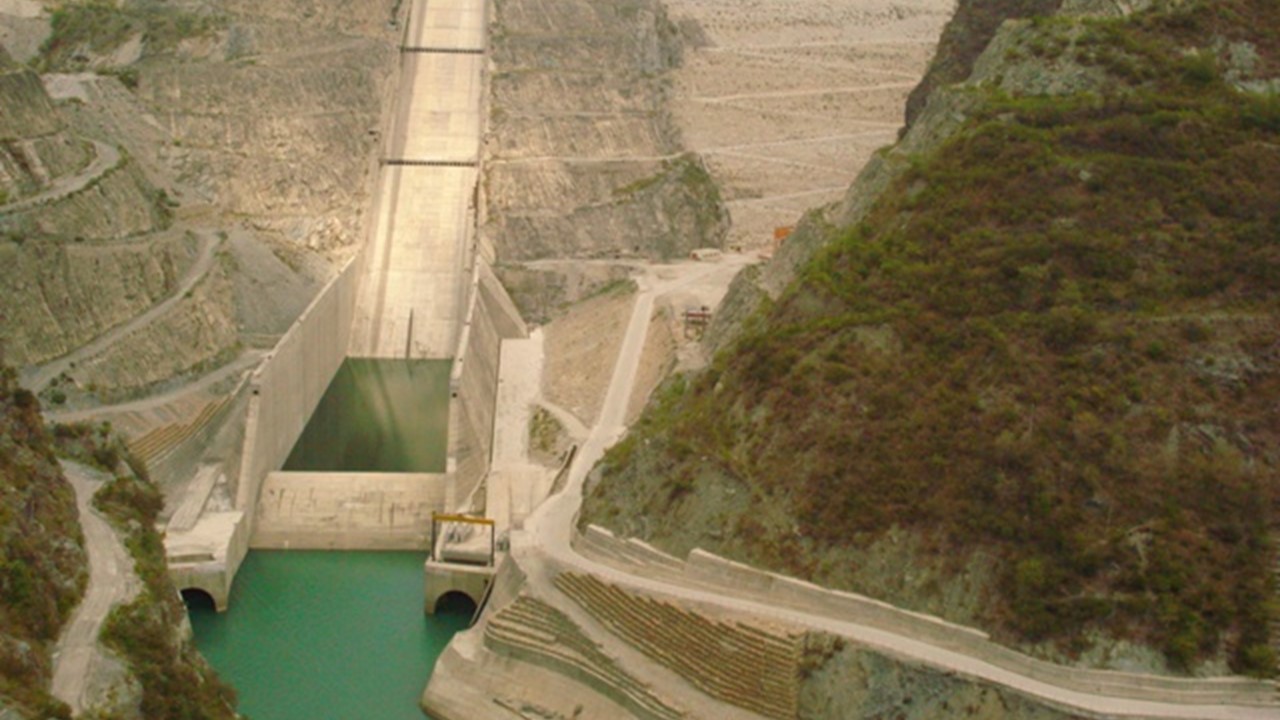
Tehri Dam

Leading seismologists seem to agree on the likelihood of a very high intensity Himalayan earthquake, whose effects may inflict huge damage on the hilly areas and the dense urban settlements of the north Indian plains, including Delhi and around. Considering the multiple recent tremors felt in the National Capital Region (NCR), there are growing concerns about the “chain impact” that a high-intensity Himalayan quake could have. That is, it could damage critical infrastructure and have a ripple effect on inhabitation near them. It is for these reasons that there is a need to reassess the risks from one of the most controversial projects in recent decades, the Tehri Dam Project (TDP). [Readmore]

Rubber Dam Market Key Trends, Manufacturers in Globe, Benefits, Opportunities to 2025


The Global Rubber Dam Market report by UpMarketResearch.com provides a detailed analysis of the area marketplace expanding; competitive landscape; global, regional, and country-level market size; impact market players; market growth analysis; market share; opportunities analysis; product launches; recent developments; sales analysis; segmentation growth; technological innovations; and value chain optimization. This is a latest report, covering the current COVID-19 impact on the market. The pandemic of Coronavirus (COVID-19) has affected every aspect of life globally. This has brought along several changes in market conditions. The rapidly changing market scenario and initial and future assessment of the impact is covered in the report.[Readmore]

India-Nepal friction casts shadow on proposed Pancheshwar multipurpose dam project

The project first conceived 24 years ago in 1996, had picked up pace in 2014 after the Narendra Modi-led NDA government came to power.

The Mahakali River on which the Pancheshwar project is to be built | wikimedia commons
New Delhi: The friction in India-Nepal ties over the latter including three disputed areas in its new political map has cast a shadow on the future of the proposed Pancheshwar multipurpose dam project that the two countries are jointly planning to build on the border.

The Pancheshwar project will come up across the Mahakali river, where it forms an international boundary between the two countries. It straddles Uttarakhand in India and the Far Western Development Region of Nepal. According to India, the river draws its waters from the Mahakali river (known as Sarada in India), which originates at Kalapani, one of the disputed sites in Uttarakhand that Nepal has now claimed as its own. [Readmore]

Thursday, 2 July 2020

Bhakra, Pong dams ready for increased inflow during monsoon

Sources in the Bhakra Beas Management Board (BBMB) said that the water level in Bhakra dam, as on Monday, was 1580.41 feet. This is 100 feet less than the total capacity of the dam, which stands at around 1680 feet.

Bhakra dam, Pong dam, Bhakra Nangal dam, Punjab dams, Haryana dams, India news, Indian Express
Ahead of the monsoon season, the Bhakra and Pong dams have created sufficient cushion space to receive the increased inflow of water the coming weeks.
Sources in the Bhakra Beas Management Board (BBMB) said that the water level in Bhakra dam, as on Monday, was 1580.41 feet. This is 100 feet less than the total capacity of the dam, which stands at around 1680 feet. Officials say that with the present rate of inflow of water as well as outflow, there was no reason for any worries.[Readmore]